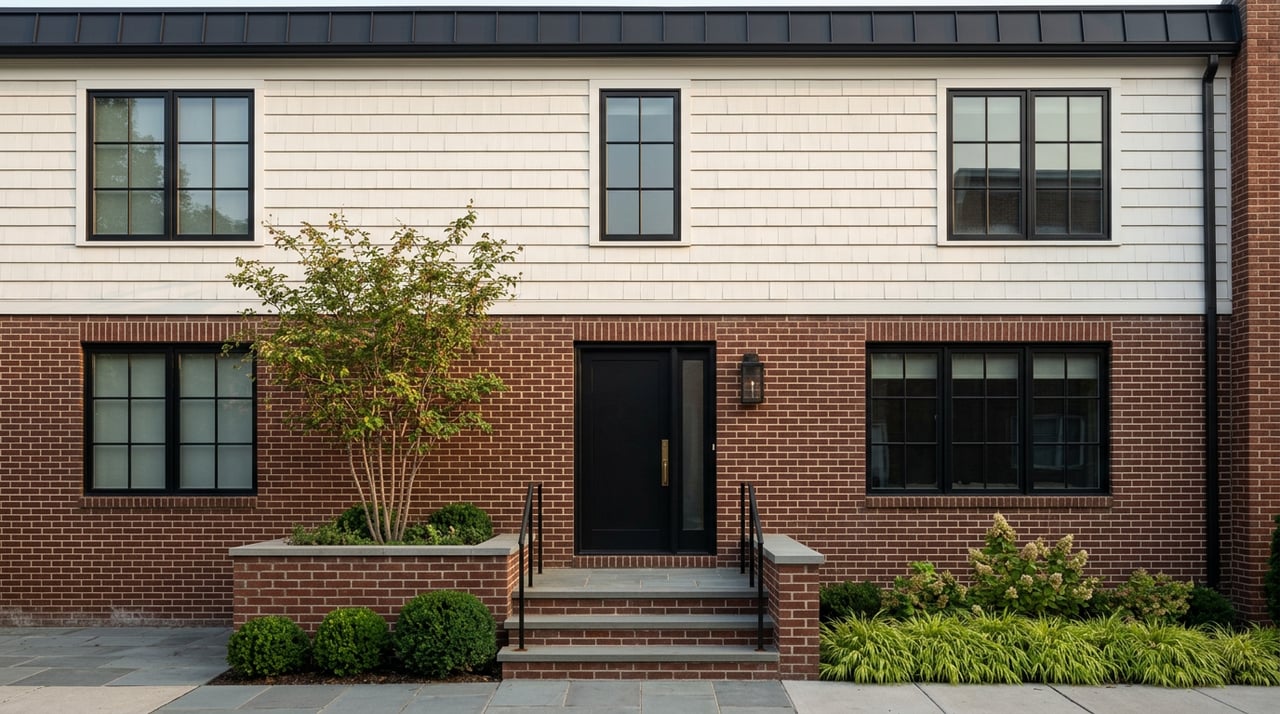
As Patch reported, on July 23, the storefront at 167 Bedford Street changed hands for the first time in years. Bari167 was gone. In its place, chef Nick Martschenko opened Uncorked, a high-end fast-casual concept built around a double-double cheeseburger, hand-cut parmesan fries and a cocktail list, inside the same four walls that had held the previous tenant.
As Patch reported, eight days later, on July 31, a different kind of opening happened two miles away. At 15 Harbor Point Road, the space that Mexicue vacated in 2025 reopened as KIN Social, a seasonal waterfront concept from the team behind The Quartiere, the pasta-and-wood-fired-pizza restaurant on Bank Street downtown. The opening had already slipped once, from an original date of July 24, which is its own small reminder that even well-capitalized restaurant launches run late.
Two restaurants, eight days apart, both filling spaces left behind by a previous business. On paper it looks like the same story told twice. It isn't. The key difference is the corridors' capacity: Bedford Street's historic buildings limit new space, while Harbor Point is still being built out and can add it. If you live in Stamford and you're trying to figure out where the next new restaurant is going to land, that difference is the thing worth understanding, not the menu.
What Each Address Used To Be
Uncorked's arrival on Bedford Street has a very Stamford backstory. Local business owner Ellie Zieminski, who owns the clothing store Love Bella in the High Ridge Shopping Center, approached Martschenko about five years ago and asked if he'd bring his New Canaan restaurant concept to town. Martschenko already lived in North Stamford, but opening a restaurant there hadn't been on his radar. He runs Uncorked locations in New Canaan, opened in 2015, and Georgetown, opened in 2025, along with The South End Bar at The Back End in New Canaan. He's a Culinary Institute of America graduate who worked under Melissa Kelly and Tom Colicchio and rose to executive sous chef at Gramercy Tavern before running the dining program at Winged Foot Golf Club. Uncorked seats about 80 people and, as Patch reported, Martschenko said the block has been "pretty jazzed up" since opening.
KIN Social's arrival reads differently. Building and Land Technology, the developer behind Harbor Point, didn't wait for an independent operator to come knocking. It went and signed one. As Patch reported, BLT's Corbo called the Harbor Point space "one of the most sought-after restaurant spaces in Fairfield County," pointing to the waterfront setting, the thousands of residents and daytime office workers already on-site, and a packed year-round events calendar as the draw for bringing in the Quartiere team specifically. This wasn't a local shop owner making an introduction. It was a developer actively curating who takes over its second-most-visible harbor-facing restaurant space.
Why Bedford Street Can Only Trade, Not Add
Bedford Street between Broad Street and Forest Street sits inside the Downtown Stamford Historic District, a designation that dates back to 1983 and was expanded twice, in 1985 and again in 2002, to capture more of the corridor's early-to-mid-20th-century commercial buildings. According to the city's own project page, this stretch functions as Stamford's Main Street, with a long run of retail, restaurant, bar and residential use, plus recurring events like Arts and Crafts on Bedford, Brews on Bedford and Bark in the Park.
That history is exactly why Bedford Street can't just build more restaurant space. The buildings are protected, the footprints are fixed, and the street itself is narrow. The city and Stamford Downtown Special Services District hired a planning firm to study the corridor, and the findings, documented by the project team, included clear pedestrian paths as tight as five feet in places and heavy clustering around existing outdoor dining setups. More than 1,300 residents responded to the survey. The takeaway wasn't that Bedford Street needs more restaurants. It's that the street is already working at capacity and needs a better plan for the space it has.
That's the mechanism behind Uncorked. It didn't add a new restaurant to Bedford Street. It replaced one, inside the same building, on the same sidewalk, with the same physical constraints Bari167 had. Uncorked joins a stretch that already includes Café Silvium, BarVera and Çka Ka Qëllu within a few blocks. When a storefront turns over here, the total number of seats on the street barely moves.
Why Harbor Point Keeps Adding Square Footage
Harbor Point is the opposite kind of real estate. It's BLT's own 100-acre mixed-use waterfront community, built from scratch rather than inherited from a historic grid, and it's still under construction as a master-planned neighborhood. The development includes more than 4,000 residences, commercial office space, more than 34 shops and restaurants, marinas, water taxis, over 25 acres of parks and open space, and a mile-long public boardwalk. It sits steps from the Stamford Transportation Center, about a 45-minute express train ride from Grand Central Terminal.
Because Harbor Point is still being built out, its restaurant count doesn't have the same ceiling Bedford Street does. KIN Social joins Sign of the Whale's rooftop bar, The Wheel's dockside patio and Fortina's wood-fired kitchen along the same run of waterfront, and none of those existed as restaurant space thirty years ago the way Bedford Street's buildings did. When Harbor Point adds a restaurant, it's often adding square footage to the neighborhood's total inventory, not just swapping a sign over the door.
Here's the split laid out directly:
| Bedford Street | Harbor Point | |
|---|---|---|
| Corridor age | Historic district, oldest buildings from the 1920s-30s | Active mixed-use build-out, still adding new construction |
| How a new restaurant arrives | Inherits an existing storefront | Often occupies newly built or newly renovated space |
| July 2026 opening | Uncorked, 167 Bedford St, former Bari167 | KIN Social, 15 Harbor Point Rd, former Mexicue |
| Who initiated it | A local shop owner introduced the concept to Stamford | The developer recruited the operator directly |
| Constraint | Five-foot pedestrian paths in places, fixed building footprints | 25+ acres of open space still being developed |
The One Swap That Complicates The Rule
KIN Social is the exception that keeps this from being a clean story. Mexicue was a national fast-casual chain, and when it closed in 2025, BLT didn't backfill the space with another chain. It went and got the team behind a locally owned, chef-driven downtown restaurant instead. Even inside a corridor built for growth, the developer chose to trade a national name for a local one. That's worth sitting with if you've assumed Harbor Point only attracts big brands chasing foot traffic. The waterfront's newest restaurant is, in spirit, closer to what Bedford Street has always specialized in: a real operator with a real address elsewhere in Stamford, expanding into a second location because the neighborhood asked for it.
What This Means For Where You Eat Next
If you're trying to predict what opens next in Stamford, the corridor tells you more than the concept does. A storefront turning over on Bedford Street means something has to close first. That's not a bad thing. It's how a fixed historic street stays interesting without adding a single square foot. But it also means the pace of new restaurants downtown will always track the pace of restaurants closing, one for one.
Harbor Point doesn't have that ceiling yet. With more than 25 acres of park and open space and a development that's still filling in, the neighborhood can keep adding restaurants the way it's added residences, in new phases, without anyone else having to close first. The KIN Social swap shows that even here, growth doesn't always mean a new national brand. Sometimes it means Stamford's own chef-driven operators simply following the growth to where the space actually exists.
Either way, the next opening you hear about will tell you something about the street it lands on before you ever read the menu.
If you're thinking about what a Stamford address near either corridor is actually worth, or how walkability and development phase affect what a property can support, that's a conversation worth having with someone who tracks this market closely. iVision Real Estate works with buyers and sellers across Greater New Haven and the surrounding Connecticut towns, and we're always glad to talk through what a neighborhood's growth pattern means for your own plans. Reach out anytime for a free consultation.
This article is general information, not legal, tax or financial advice. Consult a qualified professional about your situation.