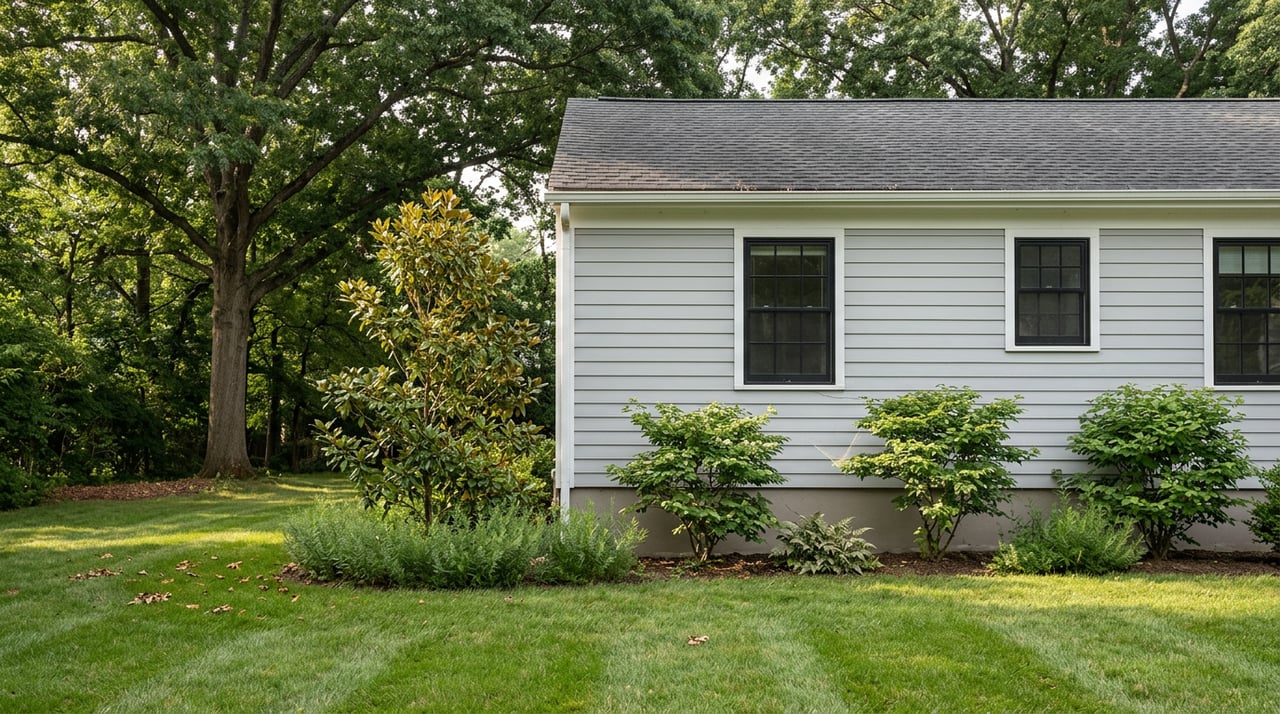
Picture listing a North Haven home you've lived in for decades, confident there's nothing unusual buried in the yard, only to have a lender's underwriter stop the file and ask for proof that isn't true. It happens more often here than most sellers expect, and a real North Haven job on record shows why: a homeowner in town needed a 1,000-gallon tank and a 550-gallon tank pulled out of the ground specifically to clear the way for a sale, work handled by the Wallingford-based crew at Tanks Be Gone. Nothing about that was illegal. Nothing about it was hidden on purpose. It's just what happens when a house built during the buried-tank era meets a lender who has decided it won't fund the loan otherwise. That gap between what the law requires and what actually blocks a closing is worth understanding before you list.
What the state actually requires, and what it doesn't
Connecticut's Residential Property Condition Report has to reach a buyer before they sign a binder or purchase contract, and it specifically asks whether there's an underground fuel tank, where it sits, and how old it is. If a seller doesn't furnish that report at all, state law requires a $500 credit to the buyer at closing under Connecticut General Statutes Section 20-327c. That number used to be $300, until a 2012 legislative change raised it to $500, and it's still $500 on the current version of the state's disclosure form.
Here's the part sellers routinely get backwards: none of this requires you to remove the tank. There is no Connecticut statute that forces a homeowner to dig up a non-leaking underground oil tank. The state fire marshal oversees the rules for installing and removing residential tanks, and any confirmed leak has to be reported to the Department of Energy and Environmental Protection, but a quiet, intact tank sitting under a North Haven lawn is, on paper, perfectly legal to leave right where it is.
So if the law doesn't force removal, why do so many North Haven sales end up dealing with this anyway?
Why North Haven turns up more of these than its neighbors
The housing stock is the reason, and it's specific to how this town grew. Homes here skew mid-to-late 20th century, split-levels, Cape Cods, and Colonial Revivals built on lots that run noticeably larger than the Connecticut norm, with the northern part of town holding onto half-acre to one-acre parcels and larger homes clustered around Ridge Road and the postwar subdivisions that filled in after that. That era, roughly 1950 through the 1980s, is exactly the window during which most residential underground oil tanks in this region went into the ground, back when oil heat was the default and a buried tank in the side yard was just how a house got warm.
Compare that to a denser, older neighborhood in the city of New Haven itself, where a large share of housing predates 1940 and the typical setup was an above-ground tank in the basement next to the furnace rather than a buried tank outside. One regional tank removal company put the contrast plainly in its own service notes: underground tanks show up more often on larger lots in outer towns like Hamden, North Haven, and Woodbridge, while dense city blocks lean toward the basement version. North Haven's particular mix of era and lot size means more of its housing stock falls squarely inside the buried-tank window, and more of its sellers are going to run into this than a seller in a triple-decker neighborhood a few towns over.
What testing and removal actually cost right now
If you're a North Haven seller trying to plan ahead of a listing rather than reacting to a buyer's inspection late in the process, the numbers below reflect the range contractors were quoting across Connecticut as of early 2026.
| Service | Typical Cost | Typical Timeline |
|---|---|---|
| Tank sweep / GPR scan | $250 to $400 | Same day |
| Underground tank removal | From $1,500 | 1 to 2 days |
| Rocky soil surcharge (glacial till) | Add $500 to $1,500 | Adds to removal day |
| Above-ground basement tank removal | $450 to $1,100 | Same day |
That rocky soil line matters more here than it might elsewhere in the state. Connecticut's glacial geology means contractors regularly hit bedrock and dense till when they dig, and that can turn a straightforward removal into a longer job with specialized equipment, which is worth building into your budget rather than discovering mid-project. Once a tank comes out, Connecticut requires the closure report to be filed within 30 days, and a local fire marshal has to be notified before the work starts.
The real gatekeeper isn't Hartford, it's the bank
This is the part that catches sellers off guard. The law sets a floor: disclose the tank, and if you don't, the buyer gets $500 at closing. But that floor has almost nothing to do with what actually blocks a sale. The real friction shows up on the lending and insurance side, where the rules aren't written in any statute and change based on who's underwriting the deal.
FHA and VA loans in particular can require proof that there's no contamination before the loan gets approved, which means a buyer using one of those programs may need a clean tank sweep or a documented closure report in hand before their financing can move forward. Insurers have followed a similar path. Some carriers writing policies in New Haven County are now conditioning coverage on the removal of older underground tanks, treating an aging buried tank the way they'd treat an aging roof or an outdated electrical panel. None of that comes from the state fire marshal or from DEEP. It comes from underwriters deciding what risk they're willing to hold, and those standards have tightened steadily even as the underlying state law hasn't changed in years.
That's the real answer behind the North Haven job that opened this piece. Nothing suggests those tanks were leaking, and nothing suggests the seller was breaking any law by not knowing they were there. The sale still needed the tanks out of the ground before it could close, because that's what the buyer's side required, law or no law.
The $500 number that misleads people
It's tempting to read the $500 credit rule and conclude that's your worst-case exposure if something goes sideways with a tank disclosure. It isn't. That $500 is strictly the penalty for failing to furnish the disclosure report at all. If you fill the report out and knowingly leave out something you actually knew, like a tank you'd forgotten to mention but genuinely remembered once your attorney asked directly, Connecticut law allows a buyer to bring a civil action for actual damages tied to that concealment, and those damages aren't capped anywhere near $500. The honest move if you're not sure whether a tank was ever buried on your property is to say so. Marking a disclosure answer as unknown is a legitimate, truthful response when it's actually true, and it protects you far better than guessing wrong in either direction.
What to do before you list
If your North Haven home was built between the 1950s and the 1980s, especially if you're on one of the larger lots common in the northern part of town, it's worth ordering a tank sweep before a buyer's inspector finds one for you. A GPR scan runs $250 to $400 and takes a day. If it comes back clean, you've got documentation ready to hand a lender or an insurer the moment they ask, and you've removed a variable that could otherwise surface in the final week of a transaction. If it turns up a tank, you have time to plan the removal on your own schedule instead of your buyer's, budget for the glacial till surcharge if it applies, and get the closure report filed well before anyone's mortgage commitment date is on the line. Two Connecticut-based contractors handling this kind of work regionally are Tanks Be Gone, based in Wallingford, and C2G Environmental, based in Naugatuck, both of whom work directly with real estate attorneys and lenders to keep sales on schedule.
A few questions worth answering directly
Do I have to remove a tank that isn't leaking before I sell? No. Connecticut has no statute requiring removal of a non-leaking residential underground tank. Whether you need to remove it anyway usually comes down to your buyer's lender or insurer, not the law.
What if I genuinely don't know whether there's a tank on my property? Answer honestly on the disclosure form. An honest unknown protects you. A guess that turns out wrong, in either direction, does not.
How long does the whole process take if a tank does turn up? A sweep is same-day. Removal typically runs one to two days depending on soil conditions, and the closure report has to be filed within 30 days after that. Planning this before your buyer's inspection period, rather than during it, is what keeps a scramble against someone else's closing date from happening to you.
If you're thinking about listing a North Haven home built in that mid-century window, or you're not sure whether your lot falls into the pattern that tends to hide these tanks, iVision Real Estate can walk through your specific property before it ever hits the market. Get Your Free Consultation and find out what's actually under your yard before a buyer's inspector does.